A three-day hybrid conference will once again bring together researchers, data scientists, policymakers, and data stewards from disciplines from all over the world to share new ideas and explore best practices in using data. Also the Research Data Alliance will celebrate its 10th Anniversary Plenary Meeting on 21-23 March 2023 in Sweden, going back to where RDA was launched in March 2013. For more info and registration, click on the button.

To address the I of Interoperability in FAIR, semantic artefacts are key. To achieve interoperability and integration, the growing number of these artefacts need to be mapped to each other. Would you like to know why mappings matter and how to make them FAIR? Then sign up for the free FAIR-IMPACT workshop on exactly this topic!

April & June | An introductory course for those people who (want to) support researchers in storing, managing, archiving and sharing their research data. The next round of Essentials starts in April. The first day of the training is planned on Tuesday 18 April, at 4TU in Delft. The final day will be at SURF in Utrecht on Thursday the 1st of June. This round of Essentials will be in English.

In this Data Trail we will give you an introduction to the CESSDA Data Archiving Guide (DAG) and the different chapters of the DAG. We also share how our DANS policies and workflows correspond to the recommendations.

Are you thinking about submitting an application for the FAIR-IMPACT Open Call? If so, please join the webinar informal Virtual Clinic on May 16th from 15:00-16:00 CEST. During the clinic, you’ll have the chance to ask the FAIR-IMPACT team any questions you have about the support actions, eligibility, and the application process.

The aim of this webinar is to present a draft of the FAIR-IMPACT guidelines for the collection and curation of metadata to archive, reference, describe and cite research software. During the webinar the participants will be requested for input.

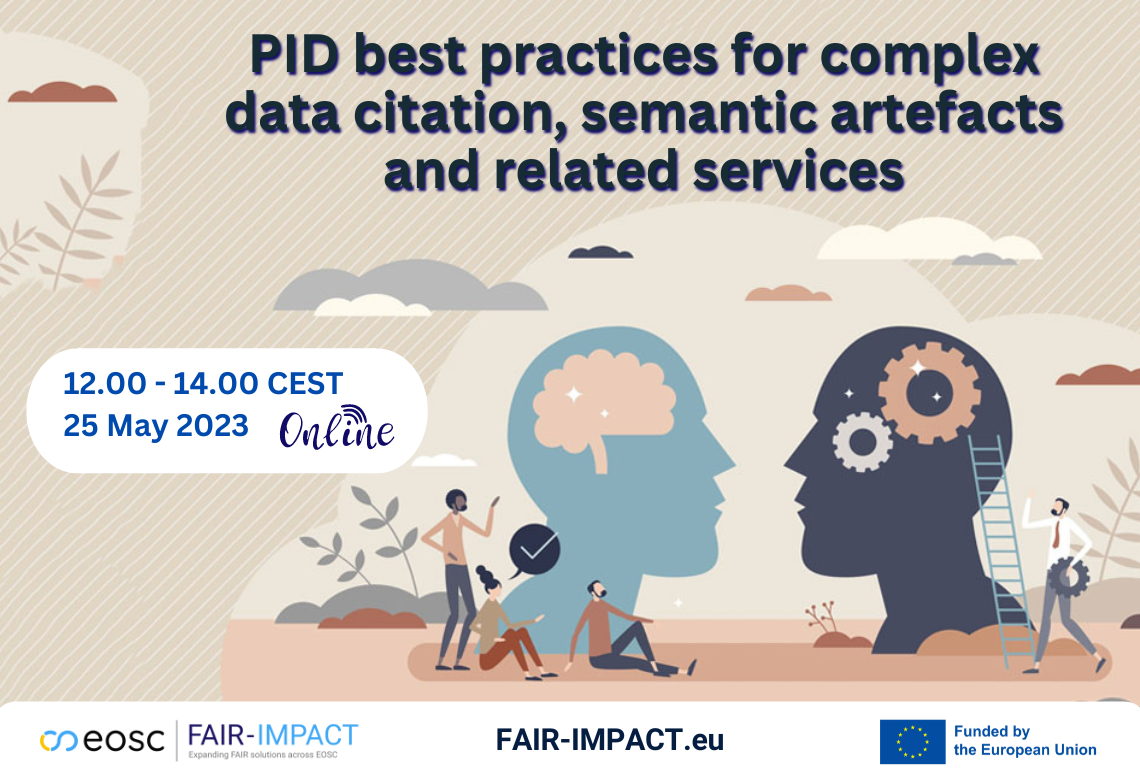
FAIR-IMPACT invites relevant projects and initiatives to provide an update on their related work and the ambition is to work together on defining community best practices on PIDs and complex data citation. The workshop will also touch upon topics of common interests around granularity, versioning and research object types. The aim is to achieve a more coherent implementation of PIDs, leading to more exact data citation and a broader and more targeted use of PIDs.

Participants will obtain hands-on experience with managing their sensitive data with the facilities and workflows being developed within the DICE project. Collaborative initiatives and guest presentations from other projects are also planned, offering a rich experience to Datathon participants on all aspects and challenges of sensitive data management. Registration deadline: 15 May 2023