News

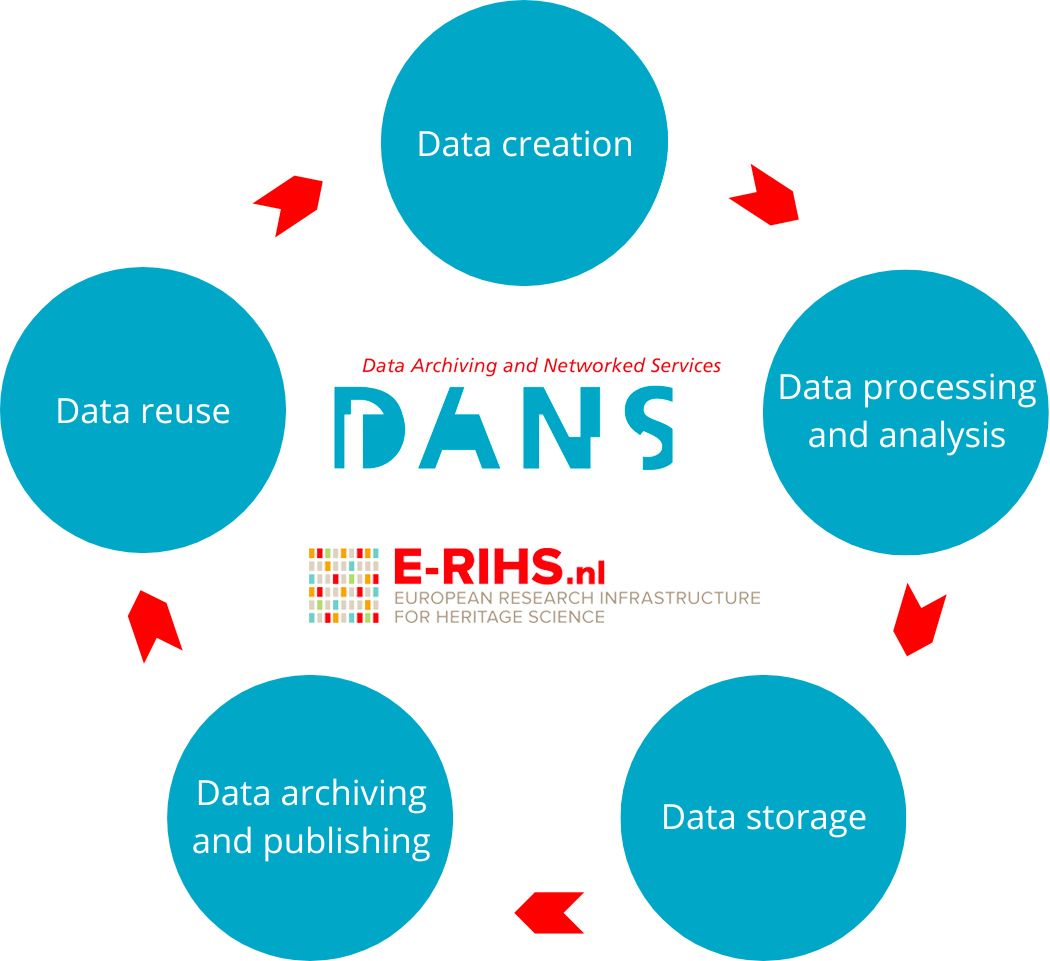
Since spring 2021, DANS has been working on the project “Working together with and on data: DIGILAB and FAIR”. This was an assignment of the Dutch hub of the European Research Infrastructure for Heritage Science (E-RIHS) consortium, E-RHIS.nl, which is in formation. This project carried out a landscape inventory and needs analysis around data management in Dutch heritage science. All findings from the landscape study were compiled in a report (Dutch) that was presented to the E-RIHS.nl working group to promote the further establishment of the network.
The Tour of CESSDA highlight each of the CESSDA national service providers one at a time. This time we take a trip to the Netherlands to meet with colleagues working at DANS, the Dutch national centre of expertise and repository for research data.

The ODISSEI FAIR Support Team is initiating a series of blog posts explaining the world of FAIR data by giving background information and explanations. 

Determining the age of archaeological remains in the Dutch soil archive is a crucial part of archaeology. Carbon-14 dating (also known as C-14 dating) is the technique used to determine the age of an organic sample. In recent decades, thousands of C-14 dating studies for archaeological research have been carried out and published in the Netherlands, but these are not publicly available. DANS is helping to change this.

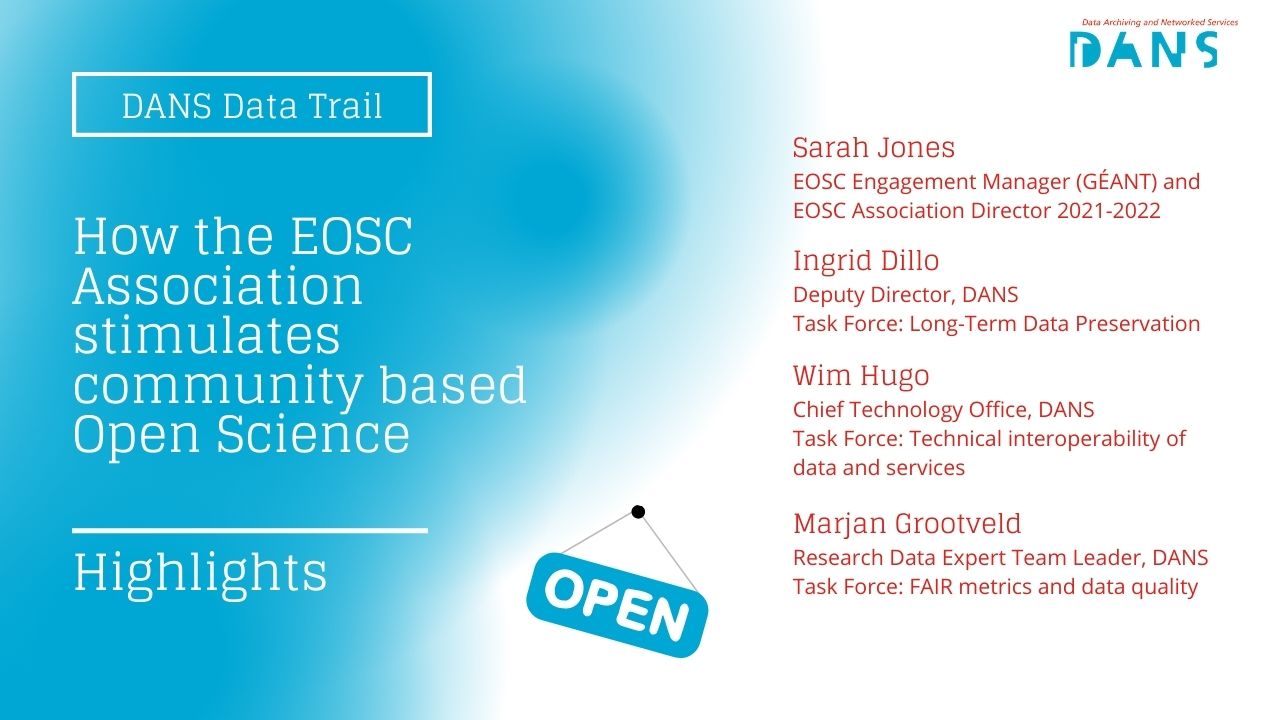
During the online DANS Data Trail ‘How the EOSC Association stimulates community-based Open Science’, DANS’ projectstaff presented several EOSC Association Task Forces. You can read the highlights of this DANS Data Trail below.

The formation of three science-wide Digital Competence Centres has started. As a first step, the Governing Board of NWO has agreed to allocate a total of 4.5 million euros for the appointment of network coordinators. They will strengthen data intensive research together with experts and infrastructures within their research domain.

DANS and the Netherlands Institute of Ecology (NIOO) – both part of the Royal Netherlands Academy of Arts and Sciences (KNAW) – are joining forces and starting a pilot project to make existing ecological data suitable for advanced data use, both now and in the future.


Programma OSF2022

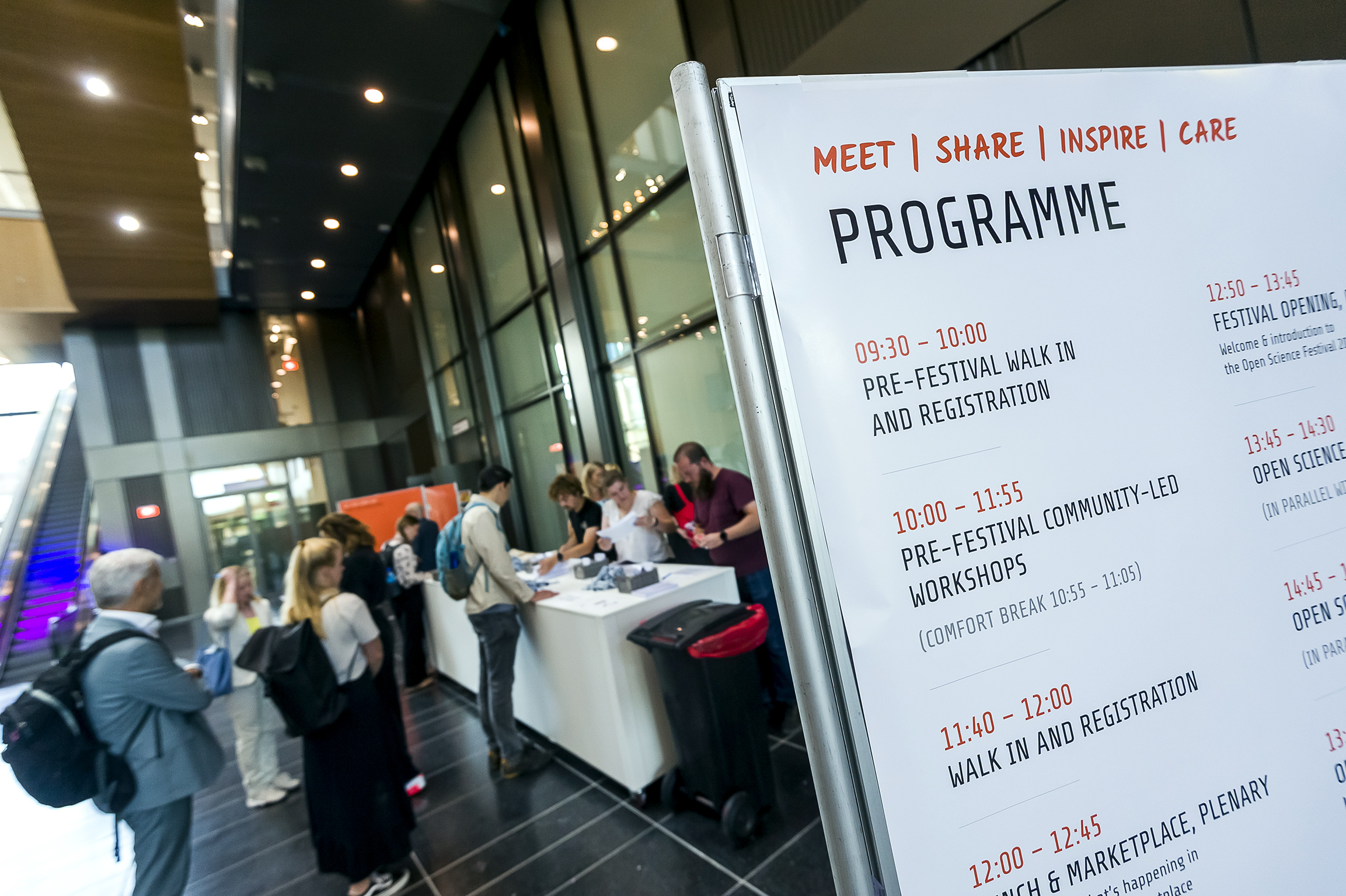
The Netherlands is a frontrunner in Open Science. This once more became apparent at the Open Science Festival 2022, which was held the 1st of September at the VU Amsterdam. The festival was fully booked, with 300 attendees on site and many hundreds following the event online.