On 17 June, from 12:00 to 13:30 CEST, the FIDELIS project will host a webinar to present the latest version of the Transparent Trustworthy Repository Attributes Matrix (TTRAM).
On 3 July, NPSO will host its annual meeting at the Central Library in Rotterdam.
This year’s theme explores how AI can enhance survey research – and how survey data can, in turn, support the responsible use of AI.
The event begins at 11:00 (doors open at 10:30) and will conclude around 16:00 with informal drinks.
The full programme and registration details will be available in mid-May.
Social Sciences and HumanitiesArchaeologyLife SciencesPhysical and Technical SciencesDataverseNL
Collaborations
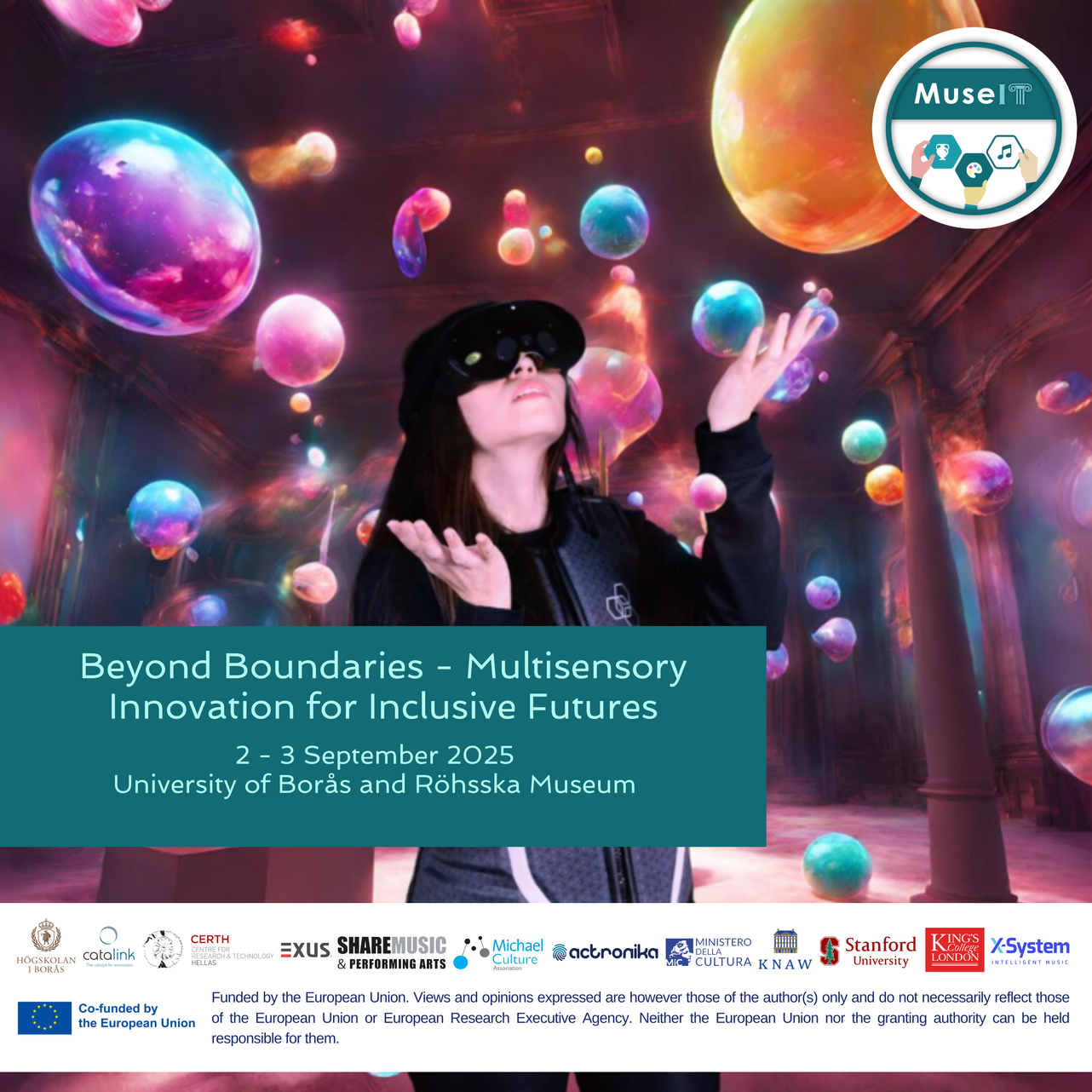
Join us on 2–3 September 2025, online or in Borås and Gothenburg, Sweden, to celebrate the conclusion of MuseIT. Discover innovative tools and multisensory approaches that make culture accessible for all, with presentations, interactive demos, and a unique inclusive music co-creation concert. Experience first-hand how MuseIT is shaping a more inclusive cultural future.
On 3 September, RDA-NL is organising a community meet-up at DANS and NWO in The Hague. Everyone is welcome to join. The morning will be devoted to an RDA showcase, followed by an inspiring afternoon session.
DataverseNL celebrates its 10th anniversary. We celebrate this with an inspiring event where we look back at a decade of open access together and look ahead to the future.
A full-day, hands-on event to co-create the Action Plan for FAIR Implementation in the Dutch Social Sciences and Humanities (SSH) for all who work on research data management.
In 2024, the NPSO organised its first ask-the-expert session on the design of questionnaires with multiple modes and devices. This second session is a follow-up covering how to deal with mode effects in the processing and analysis of surveys.
GDPR 4 Data Support is an RDNL training course covering the key concepts of the General Data Protection Regulation (GDPR), as well as the steps that data supporters can take to protect personal data in scientific research. It is intended for anyone who supports — or aspires to support — researchers in handling personal data responsibly. It helps research data professionals act as a link between researchers and privacy professionals, such as privacy officers.