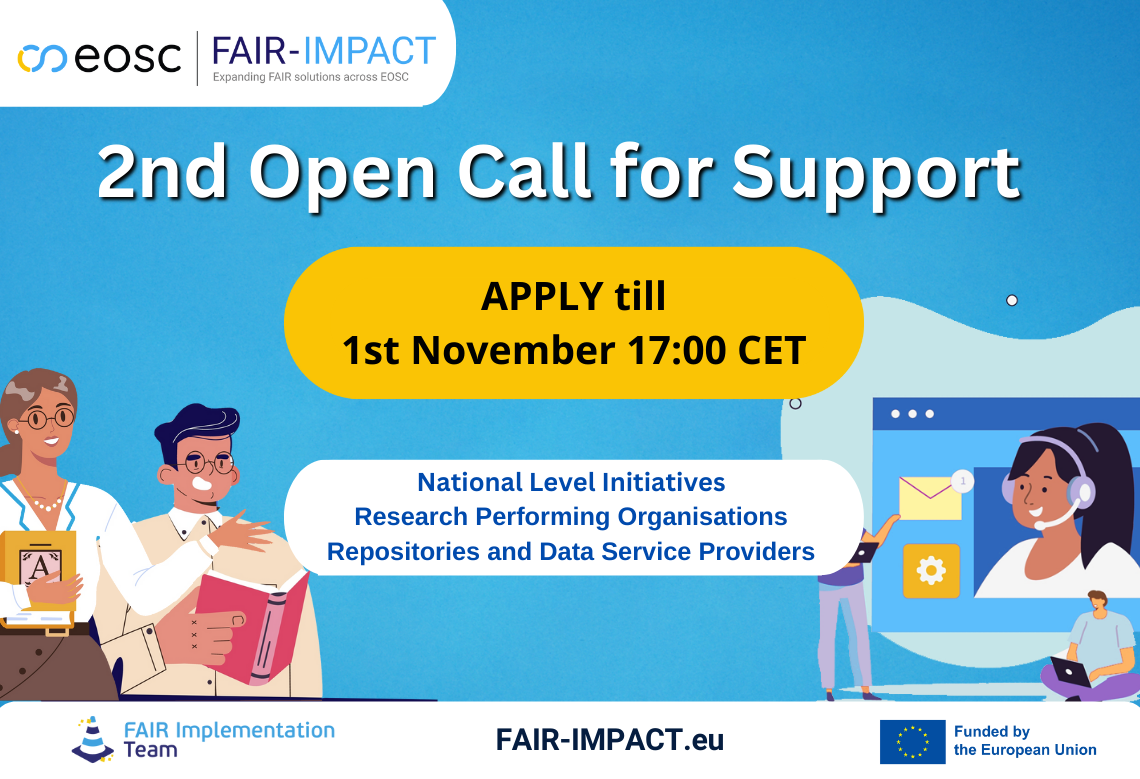
For those just getting started on their FAIR-enabling journeys, FAIR-IMPACT provides dedicated guidance and one-to-one support to successful applicants from our three key stakeholder groups to self-assess their current capabilities and to develop FAIR implementation action plans: National Levels Initiatives, Research Performing Organisations, Repositories and Data Service Providers. Successful applicants will receive one-to-one support with dedicated mentors. Apply before 1 November, 17:00 CET.

Building on the successful Synchronisation Force workshop 2022, the workshop aims to discuss common challenges and priorities related to turning the FAIR principles into practice. The workshop takes place as a series of six virtual sessions between 2 November 2023 and 8 February 2024, with the five core sessions between 27 November and 7 December 2023. Invited to this workshop are selected, key FAIR representatives of projects and initiatives in the EOSC framework.

ODISSEI, the research infrastructure for social science in the Netherlands, connects researchers with the necessary data, expertise and resources to conduct ground-breaking research and embrace the computational turn in social enquiry. This conference seeks to bring together a community of computational social scientists to discuss data, methods, infrastructure, ethics and theoretical work related to digital and computational approaches in social science research.

In this event, the experts of CESSDA show how the Data Management Expert Guide (DMEG) offers information you need to answer the questions typically occurring in a Data Management Plan (DMP).

This lecture will include an introductory overview of challenges that typically occur when theorising, designing, and conducting longitudinal studies. Methodological challenges will be described using examples and recommendations based on our previous experience in designing and conducting longitudinal studies among adolescents. The lecture - as part of CESSDA partners participation in the COORDINATE project - will conclude with brief guidelines for choosing a method for analysing longitudinal data.

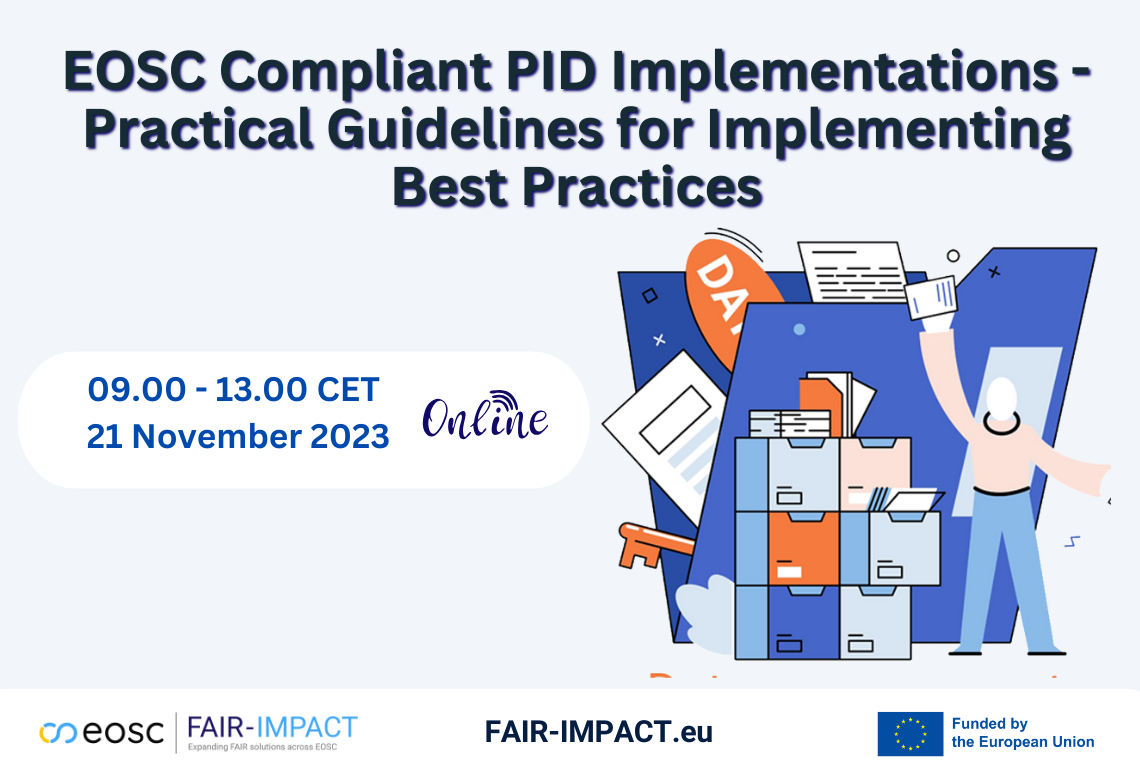
How can you adapt existing PID implementation best practices and apply them to your domain and work? This workshop will provide an overview of PIDs within the EOSC framework, including the PID policy, PID-related projects and recent developments.

Trustworthiness of data repositories is a key factor enabling Open Science. It is critical for repository end users to be able to find and access data. CoreTrustSeal (CTS) is well recognised as a community driven, domain agnostic, core certification framework. This workshop will showcase relevant initiatives, demonstrate how they are organised, the activities involved, and identify good practices. The workshop is primarily aimed at individuals with an interest in different regional, national and thematic initiatives/approaches to CTS certification, as well as those with a general interest in the management and certification of data repositories.
Community Engagement: why it is key for Open Science and how to unleash it? The transition to Open Science is a complex process which entails a culture change in academia. Theories have identified Community Engagement as one of the most potent strategies to stimulate large-scale behavioral change. In this session, we identify what Community Engagement is and how you can stimulate it.