News

Since the publication of our guide Making Qualitative Data Reusable in early 2023, the  Short Guidebook For Researchers And Data Stewards Working With Qualitative Data has been viewed over 12.000 times. We want your feedback to improve and update this guide.

A newly-published data paper in the themed journal issue on ‘Ampifying GLAM collections’ presents a rich overview of the ‘First-Hand Accounts of War: War Letters (1935-1950) from NIOD Digitised’ dataset in the DANS Data Station Social Sciences and Humanities (SSH). Read all about the dataset, the methods for data curation and sharing and its reuse potential.

Our Data Station Archaeology has been recognised in a recent study as one of four repositories that meet theEssential readiness level’ within the European Open Science requirements. This recognition highlights DANS’s commitment to advancing open and FAIR (Findable, Accessible, Interoperable, and Reusable) data management for archaeological research.  

How can we best organise collaboration in the ever-expanding research landscape under the paradigm of Open Science? This is a central question for both researchers and those who support them. An international model for Global Open Research Commons will help.  

Two new EU-funded projects, EOSC EDEN and FIDELIS, started 1 January 2025 bringing over 30 European and international organisations together to advance digital preservation and curation in Europe. DANS is involved in both projects.

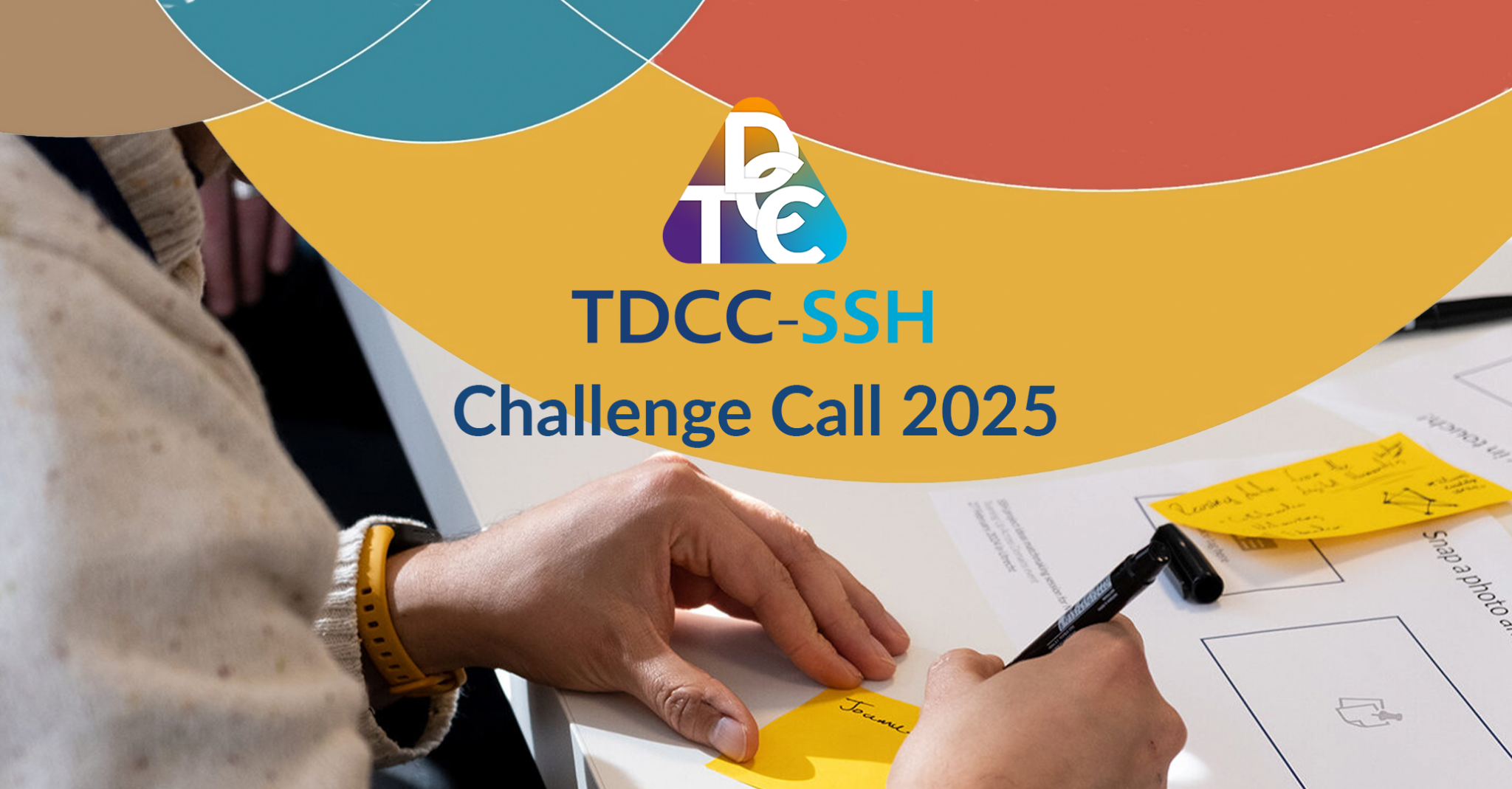
Logo for TDCC SSH with Challenge Call 2025 as text, featuring a dynamic background with vibrant colors.

Upcoming funding opportunity for collaborative projects solving challenges with FAIR Data and Software in the Social Sciences & Humanities.

Make your experiences heard: ‘Untangling FAIR implementation in the Dutch Social Sciences and Humanities’, one of the TDCC-SSH Bottleneck Projects, would like to hear from you!

DANS was invited to give a guest lecture at the University of Amsterdam focused on depositing interviews and oral history data in the DANS Data Station Social Sciences and Humanities (SSH). The materials presented in this event can now be viewed and reused via Zenodo.