iPRES 2025 in Wellington: Reflections on the Evolving Practice of Digital Preservation
For the third time Valentijn Gilissen, Data Processing Team Leader at DANS, was present at the International Conference on Digital Preservation (iPRES). In this blog post, he reflects on the event, and shares his experiences and lessons learned.
By Valentijn Gilissen
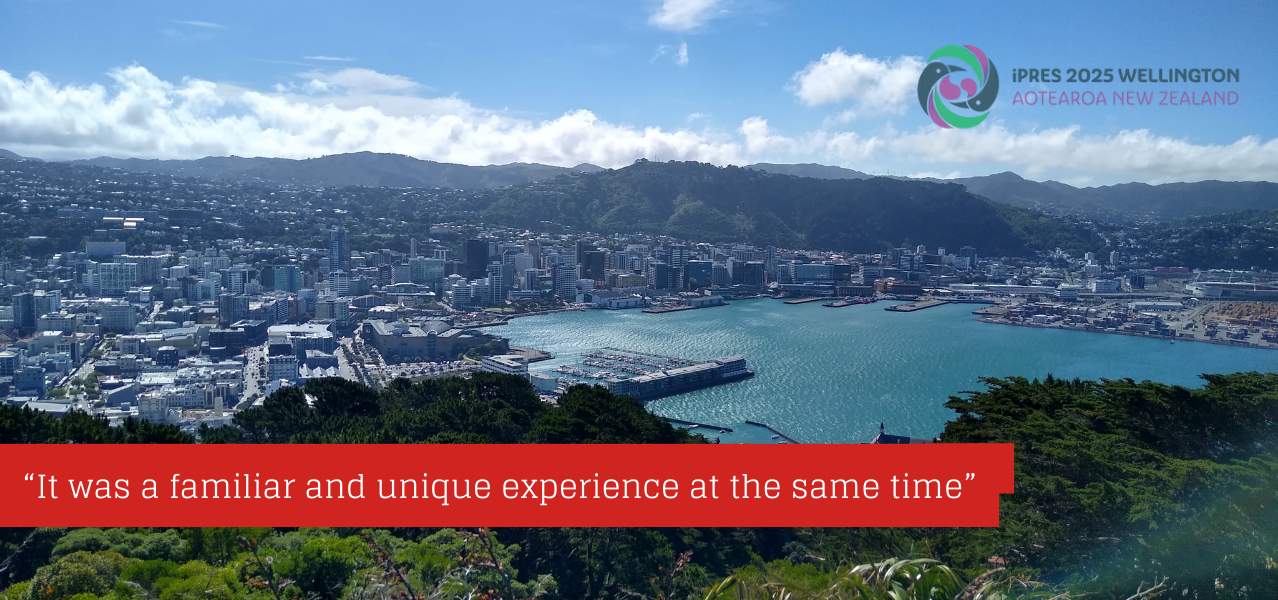
The 21st International Conference on Digital Preservation (iPRES 2025) took place from 3–7 November in Wellington, New Zealand. For me, it was the third time I attended the conference, yet the experience was familiar and unique at the same time. Travelling quite literally to the other side of the world, with 23 hours of flight time and a 12-hour time difference to navigate, resulted in an unforgettable setting. Wellington is a vibrant mix of nature, culture and warm hospitality, providing an inspiring backdrop for a week dedicated to digital preservation.
A familiar format in a unique cultural setting
The schedule of iPRES 2025 followed its established structure: workshops and tutorials on Monday, followed by three days of content-rich programmes, and professional visits at the last day, that offer in-person attendees the chance to explore more of the host city and to get to know a variety of local institutions behind-the-scenes. With a variety of contributions, including the popular “bake-offs” tool demonstrations, the programme once again showcased the broad scope.
This year, the indigenous Māori culture played a significant role in shaping the experience, with traditional Karakia blessings, waiata songs and pōwhiri ceremonial welcomes opening the days and events. A performance by a Māori dance group was also included in the reception, the conference dinner took place in the iconic ‘Beehive’ Parliament building, and all conference attendees were granted free and exclusive access to the Museum of New Zealand (Te Papa Tongarewa). The addition of local cultural elements into the programme introduced us to various aspects of the indigenous culture of Aotearoa (New Zealand) and everyday life of the Māori people.
Bridging Research Data Management and Digital Preservation
My short paper presentation (see abstract) focused on the roles and expectations of researchers, data managers and repositories. I argue for stronger insight into real-world reuse as evidence of our collective impact on the research lifecycle. Several attendees approached me afterwards with thoughtful comments, and one question in particular stood out: “How do we bridge the divide between Research Data Management (RDM) and Digital Preservation?”
My response emphasised the need for shared stories, tangible reuse cases that demonstrate long-term value, as well as the importance of people who can ‘speak both languages’. Many of the challenges raised throughout the week reinforced this message: digital preservation and RDM practitioners often face the same obstacles, but tackle them from different angles. Encouraging dialogue between these groups remains essential.
A inspiring and sobering keynote
Among the many sessions, one keynote deeply resonated: Simon Kofe, politician from the island nation of Tuvalu, described the preparations his country is making in anticipation of a worst-case climate scenario in which Tuvalu may lose all land above water. Through extensive LIDAR scanning, 3D documentation, and cultural interviews, they are safeguarding the nation’s identityin case it ever needs to exist as a “virtual nation”.
This was a powerful reminder of why our work matters. Digital preservation is not just about technical workflows; it’s about safeguarding the memory, culture, and rights of communities that are potentially under existential threat. When asked how the research community could help, the response was that Simon Kofe is a politician and not an archivist, preservation specialist, and technologist; they need our knowledge on these matters. It was both inspiring and sobering.
Highlights from the papers and lightning sessions
As always, presentations are the core of iPRES. I attended a workshop on file format identification, a deceptively complex topic. An online resource provided a useful explanation of hex signatures and the construction of PRONOM entries, showing how technical decisions can have a significant impact on everyday preservation workflows.
I also attended sessions covering trust frameworks, the preservation of open-access journals, digital reading rooms, format ecosystems, disaster management, workflow design, 3D preservation, and sustainability, among other topics. A few noteworthy themes emerged:
- Trust and transparency remain central themes. User-centred approaches are gaining ground as an alternative to, or addition to, formal certification.
- File format complexity is increasing. It is now estimated that there are more than 12,000 formats, which highlights the difficulty of identification and risk assessment.
- Collaboration and standardisation are critical. Whether it is validating spreadsheets, aligning format policies, or supporting 3D data, community-driven tooling and shared guidelinescontinue to be essential.
- Sustainability and climate impact are rising priorities. Both in preservation workflows and in the geopolitical contexts of digital heritage.
- Access to sensitive or restricted data is increasingly being addressed through Trusted Research Environments and digital reading rooms, which are highly relevant to research data management.
The lightning talks further showcased the diversity of global practices, ranging from preserving ceramic heritage and government data to WeChat archiving, environmental footprints and 3D preservation in industry contexts.
Looking back and forward
iPRES 2025 offered a rich mix of technical insight, cultural exchange and strategic reflection. For those working at the intersection of RDM and digital preservation, the conference reaffirmedhow interconnected our challenges are. It also emphasised the importance of ongoing dialogue, shared standards and practical evidence of reuse.
Most importantly, it reminded me – as Simon Kofe’s keynote so vividly demonstrated – that our work matters far beyond our own institutions. Preserving the world’s digital memory is a globalresponsibility, and iPRES once again provided the network, inspiration and momentum to continue this work collectively.
RDM
Do you have questions about this news item?