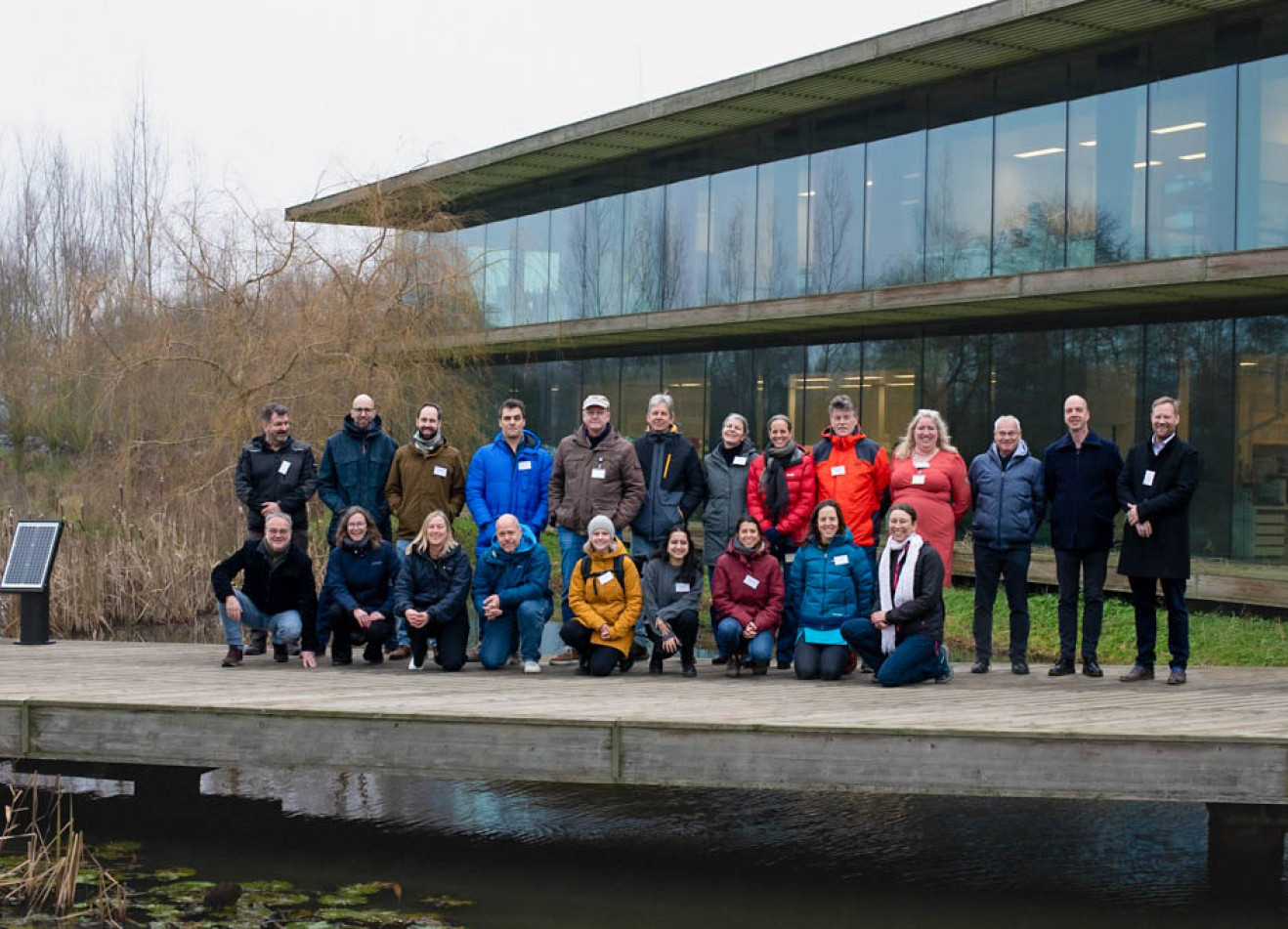
With this investment, the consortium—coordinated by the Netherlands Institute of Ecology (NIOO-KNAW)—will consolidate and expand its network of experimental facilities to monitor and predict developments in water quality across Dutch freshwater ecosystems. DANS and the University of Twente are contributing as data partners.
Over the next ten years, “mini-lake” experimental facilities at NIOO-KNAW, Radboud University, Leiden University, and the Sinderhoeve site of Wageningen University & Research (WUR) will collaborate to provide Self-Monitoring, Analysis, and Reporting Technologies (SMART) for state-of-the-art aquatic research. As lakes, ponds, and rivers face continuous threats from chemical pollution, climate change, and invasive species, these research facilities will play a vital role in supporting effective water management and evidence-based policymaking. Robust data management, accessibility, and the ability to reuse both data and the underlying models and calculations will be essential components of this infrastructure.
Cees Hof, responsible for the DANS Data Station Life Sciences, was involved in the SEFAP preparations. “We are very pleased with our role as a data partner in this project and excited to collaborate with our KNAW colleagues at NIOO. Working with sensor and automated measurement data is becoming increasingly important, but also poses challenges in terms of sustainable archiving and sharing. This project will significantly enhance our expertise and technological capacity in handling sensor data from experimental research.”
In addition to the LTER-LIFE project, SEFAP marks the second large-scale research infrastructure in the green life sciences in which DANS is involved.
Further information on the SEFAP infrastructure is available on the NIOO website and the NWO website.